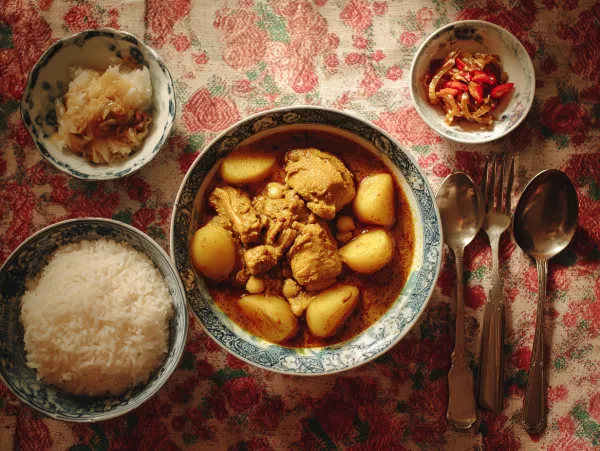


Classic hawker curry rice
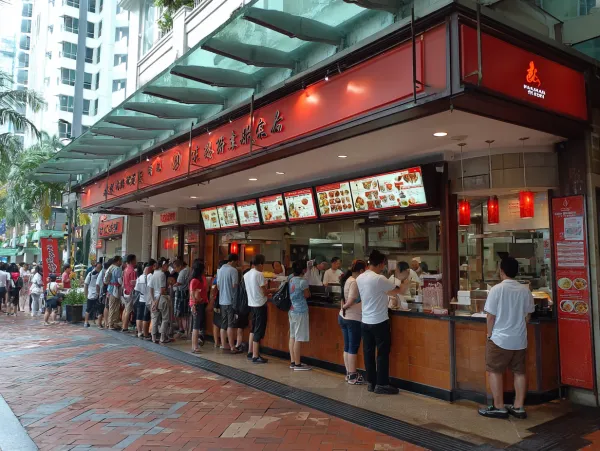
Beach Road Scissor Cut Curry Rice
Casual Beach Road hawker stall known for scissor-cut curry rice served with house braised gravy and homely sides....
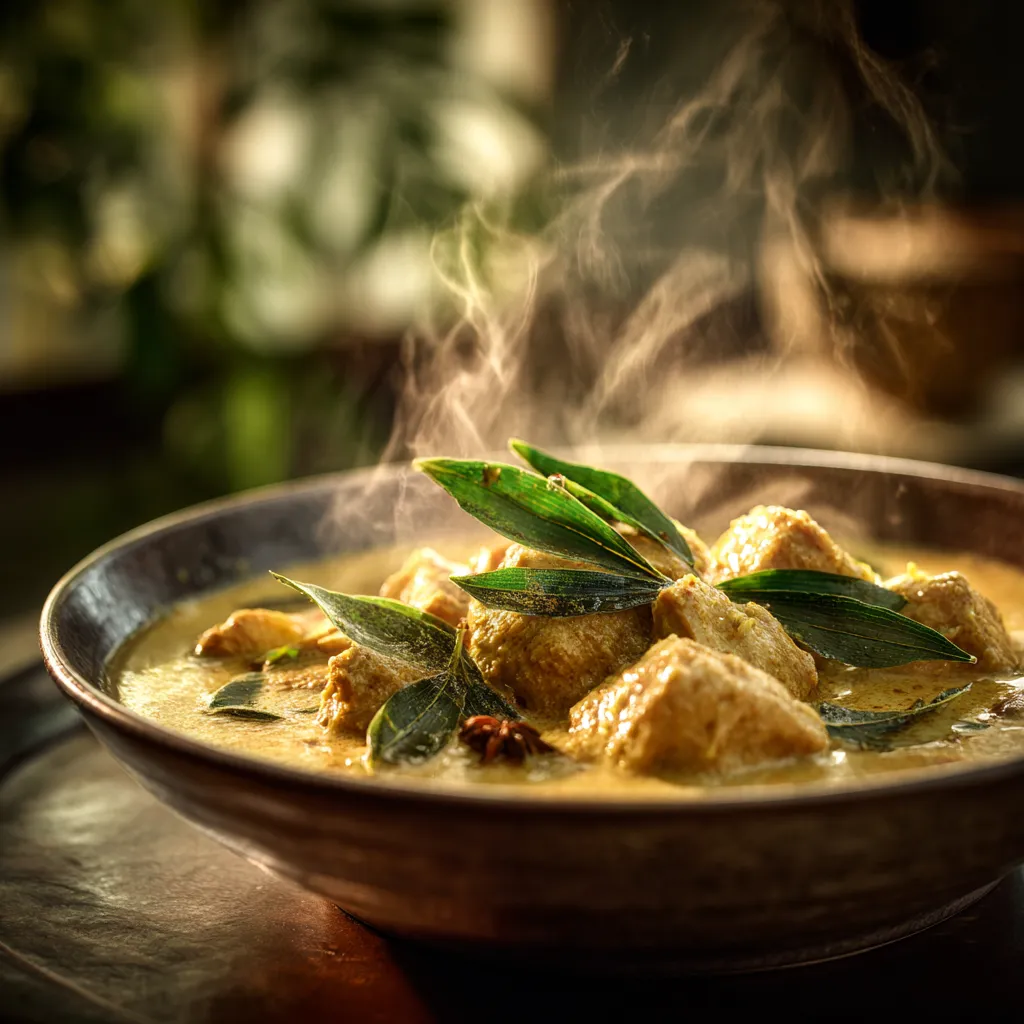
A concise, Singapore-flavoured guide to the small but crucial ingredients and techniques that lift a home curry chicken from good to perfect — with local tips and hawker picks.
It’s the little things — a toast of coriander seeds, a sliver of galangal, a dab of belacan — that make a Singapore curry sing.
If the oil separates from your rempah, you’re on the right track — that’s flavour, not a mistake.
Curry chicken shows up everywhere in Singapore — from kopitiam lunchtime plates to festive Nyonya dinners and zi char sharing bowls. It’s a dish that wears many hats: Malay, Peranakan (Nyonya), Indian-inspired kari and casual hawker-style stews all coexist in our food landscape.
Understanding the secret ingredients behind a great curry chicken helps you read and appreciate those regional differences when you’re makan-ing around town — whether you’re queuing at a hawker centre in Tiong Bahru or ordering takeaway near Orchard for a rainy evening.
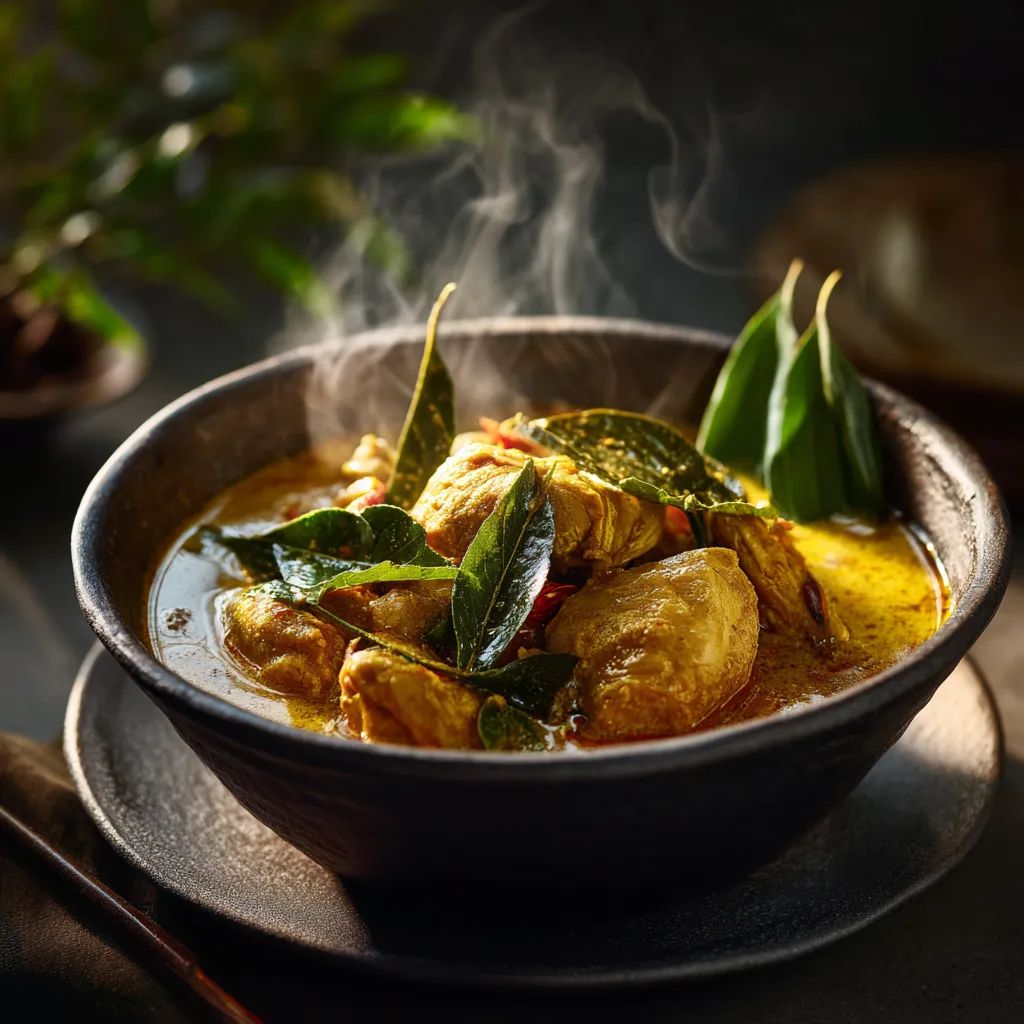
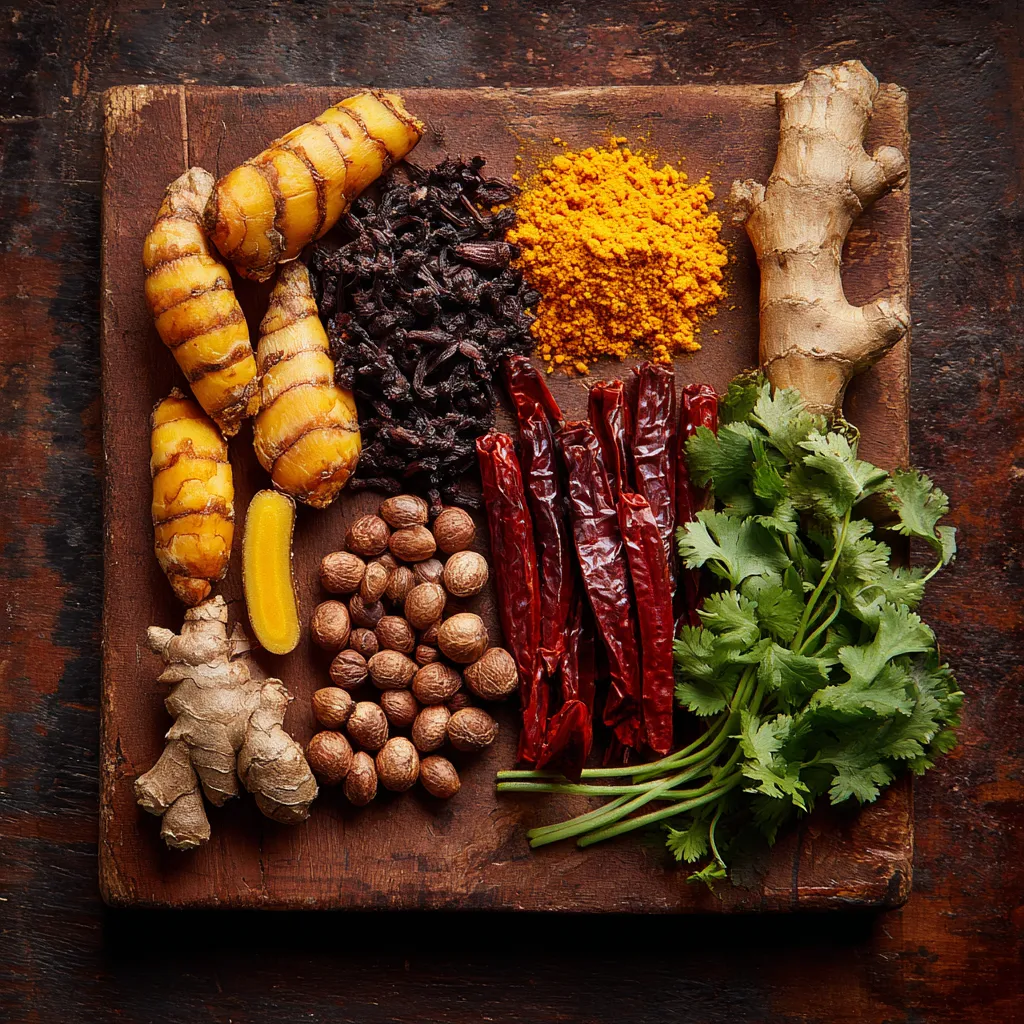
Start with a fresh rempah or spice paste: toasted coriander and cumin seeds, dried chillies, shallots, garlic, fresh turmeric or ground turmeric, galangal and candlenuts (or macadamia as a milder swap). The toasted whole spices unlock oils that make the curry fragrant rather than flat.
Add balance: a splash of tamarind or a few pieces of assam gives brightness; a small spoon of belacan (shrimp paste) contributes umami and the savoury backbone you find in authentic hawker curries; and a little gula melaka or palm sugar rounds harsh edges without making the curry sweet.
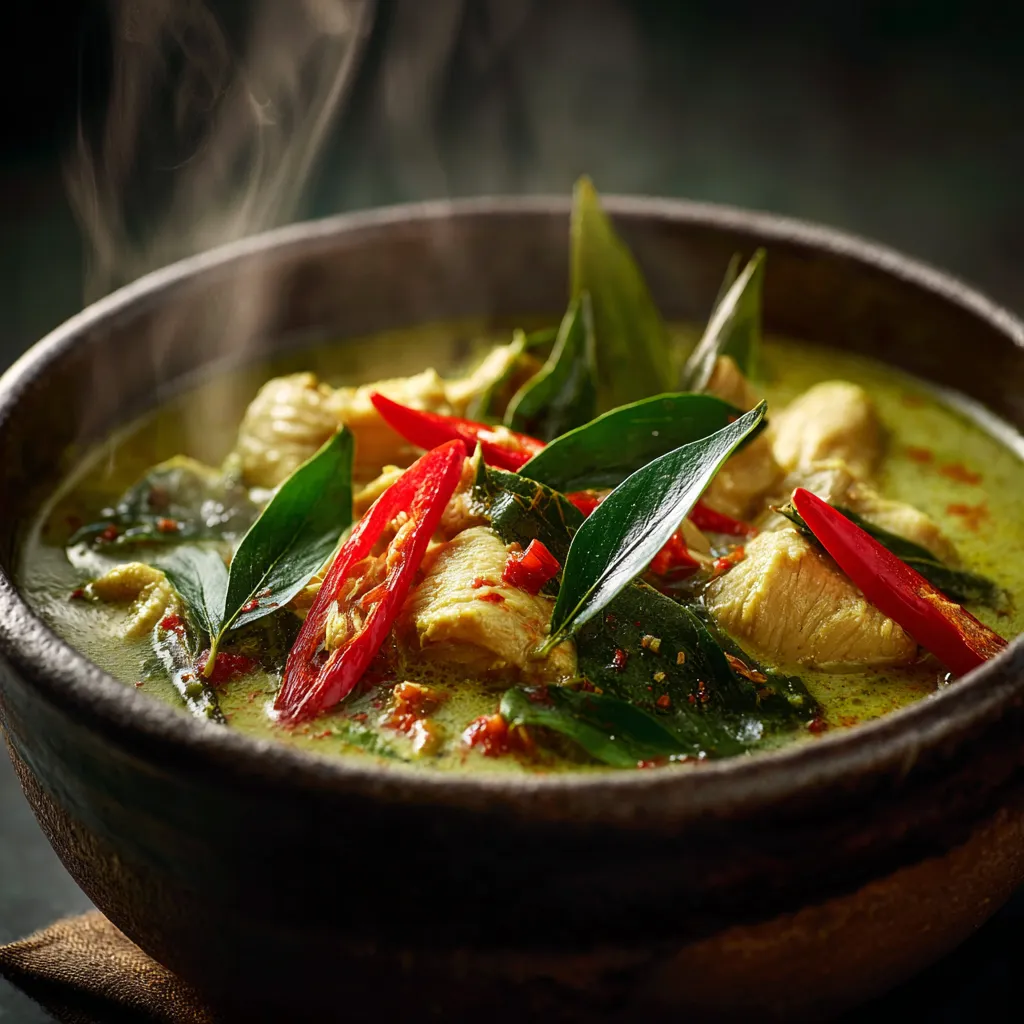
Technique beats shortcuts. Fry your rempah slowly in oil until the paste separates and the oil rises — that’s when the spices have released their flavours. Add chicken and sear briefly before adding coconut milk or water to avoid a diluted-tasting curry.
Simmer gently with the lid half on. High heat makes coconut milk split and the flavours won’t marry. Finish with fresh curry leaves, a bruised stalk of lemongrass, and a final tamarind check — this is when you decide whether the curry needs more salt, acidity or a touch of sugar.
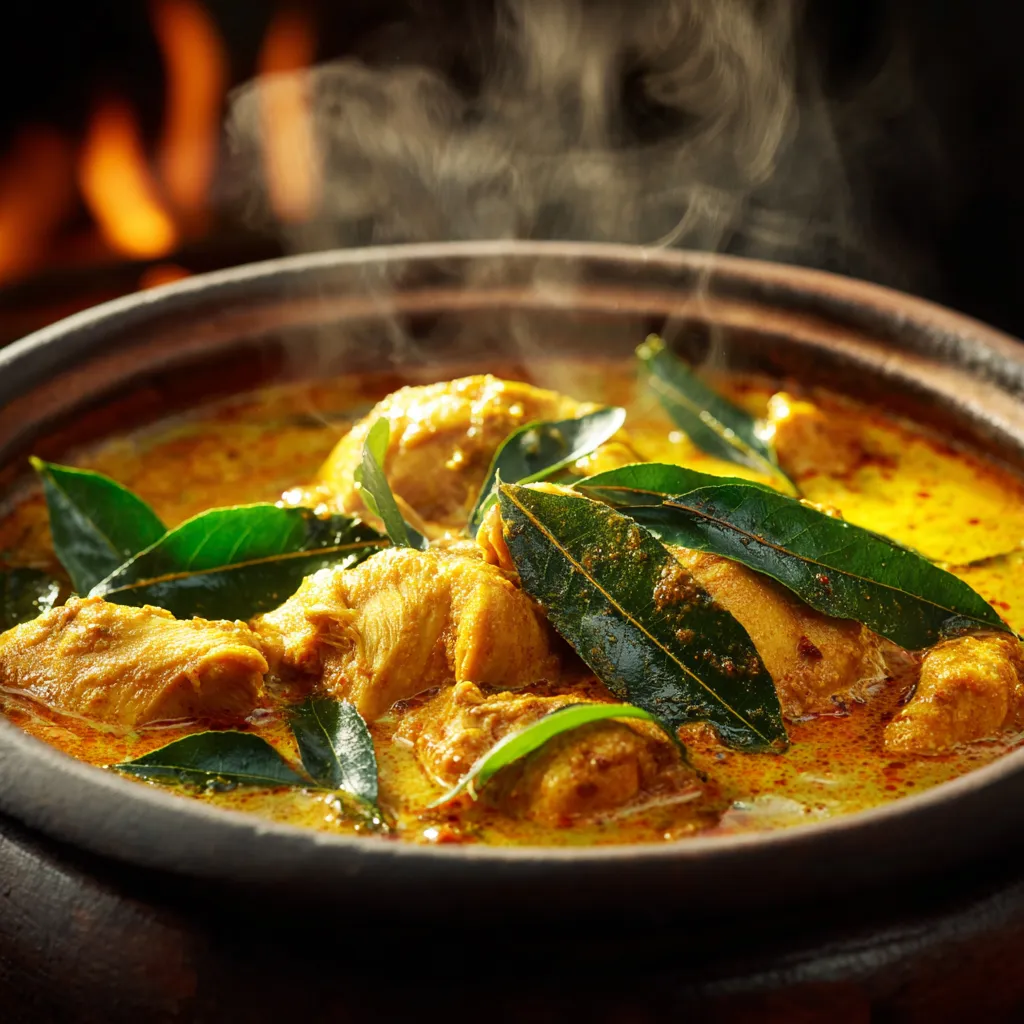
If you want classic hawker comfort, look for kopitiam or hawker stalls that serve curry-chicken rice with keropok and achar — these are neighbourhood staples across East Coast, Geylang Serai and Tiong Bahru. For more Peranakan/Nyonya versions (richer, with rempah-forward flavours), neighbourhood restaurants and some family-run places around Katong and Joo Chiat excel.
For a quick curry-puff or commercial take inspired by curry chicken, familiar chains and bakeries in malls and CBD food courts show how the flavours are adapted for grab-and-go crowds.
Pair curry chicken with plain coconut rice, steamed white rice, or even crusty bread for dipping. Accompaniments like achar (pickled vegetables), keropok and a squeeze of lime cut through coconut richness and refresh the palate.
Common mistakes include over-relying on curry powder alone, over-boiling coconut milk, or under-seasoning. Use curry powder as a supporting note, not the main spice profile, and taste often — Singapore palates favour a balance of savoury, tangy and slightly sweet.